If you are standing in the pantry with a box of tagliatelle in one hand and a jar of sauce in the other, the choice between ragù Bolognese, marinara, and cacio e pepe can feel bigger than it should. Each pasta sauce has a very different texture and richness, and only one truly suits tagliatelle in the classic Italian sense.
For tagliatelle, traditional ragù Bolognese is the benchmark. Marinara and cacio e pepe can work with this pasta, but they behave very differently in the pan and on the fork. Understanding how each sauc clings, coats, and tastes is the key to deciding whether tonight is a rag bolognese vs marinara vs cacio e pepe kind of night, and to choosing a jar that will actually flatter your tagliatelle rather than fight it.

Premium Traditional Ragu' Bolognese
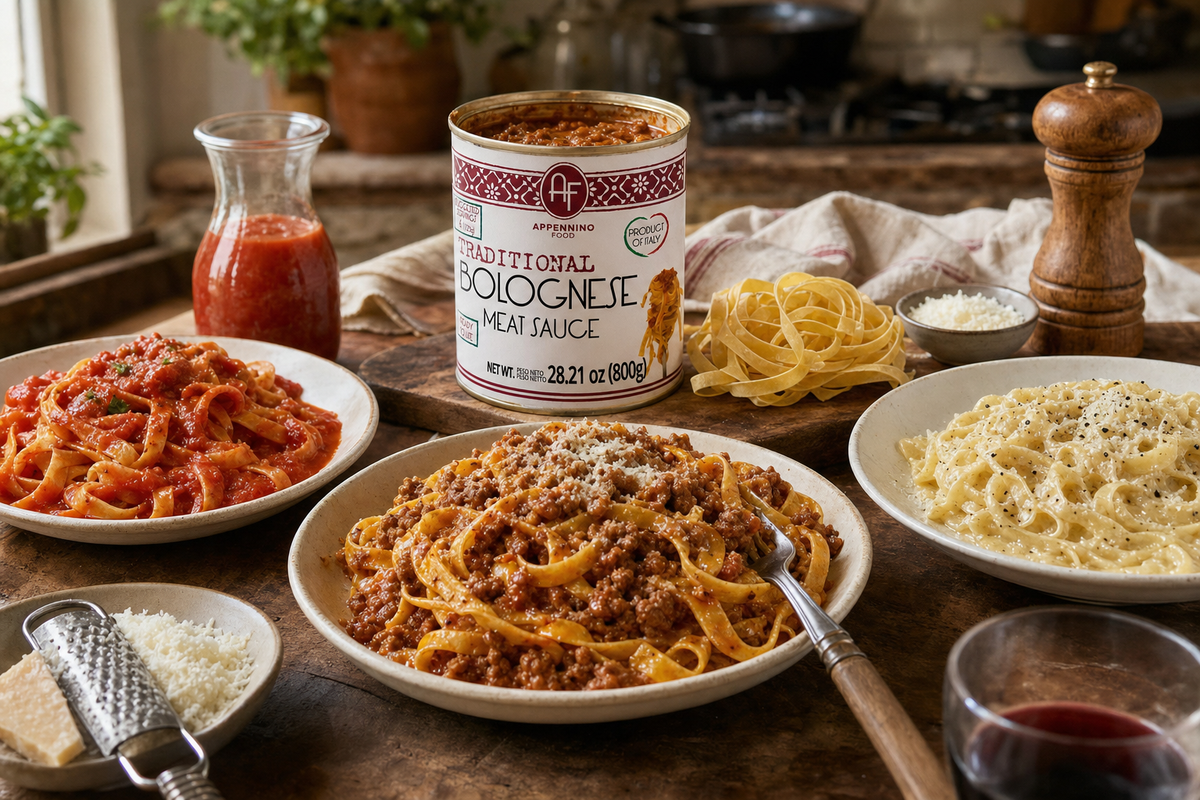
Premium Traditional Ragù Bolognese by Appennino Food. Made to the traditional recipe with both pork and beef. Long, slow cooking lets the aroma of every ingredient come through, giving this…
View productKey takeaways
- Tagliatelle is designed for meat-based ragù Bolognese, whose thick, slow-cooked texture grips every ribbon of pasta.
- Marinara is lighter and more tomato-forward, pleasant on tagliatelle but better suited to simpler shapes and quick weekday meals.
- Cacio e pepe creates a glossy cheese-and-pepper coating that can cling beautifully to tagliatelle, but it delivers a completely different, meat-free experience.
- When choosing between rag bolognese vs marinara vs cacio e pepe, think about richness, dietary needs, and how much time you want to spend finishing the dish in the pan.
- If you want the most traditional pairing that truly suits tagliatelle, a proper ragù Bolognese is still the gold standard.
Why sauce choice matters so much for tagliatelle
Tagliatelle’s shape and bite
Tagliatelle is a long, flat pasta, typically about 8 millimeters wide. It has more surface area than spaghetti and more chew than fettuccine from other regions. Those broad ribbons mean two things for any sauc you choose:
- They need enough body and fat in the sauce to cling instead of sliding off.
- They reward slow-cooked flavors that can stand up to a firm, egg-rich bite.
That is why classic tagliatelle from Bologna is served with ragù, not plain tomato or very thin sauces. The pasta and the condimento were designed together.
How ragù, marinara, and cacio e pepe behave on tagliatelle
Comparing ragù Bolognese vs marinara vs cacio e pepe on tagliatelle is really about texture plus flavor:
- Ragù Bolognese brings minced meat, vegetables, and a gentle tomato base that form a thick, spoon-coating sauc. It locks on to each ribbon of pasta.
- Marinara is mostly tomato and olive oil, usually smoother and looser. It can pool in the plate instead of hugging the tagliatelle if you are not careful with reduction.
- Cacio e pepe is a creamy emulsion of cheese, starchy pasta water, and black pepper. When done right, it creates a glossy film that coats every surface of the pasta.
So while all three pasta sauces can technically suit tagliatelle, they give very different eating experiences. Next, let us look at each one more closely.
Ragù Bolognese: the classic partner for tagliatelle
What makes a true ragù Bolognese
Ragù from Bologna is not just any “meat sauce.” It is a slow-cooked combination of finely minced meat, aromatic vegetables, and a restrained amount of tomato that produces remarkable depth without harsh acidity.
Appennino Food’s Premium Traditional Ragù Bolognese follows that tradition closely:
- Two meats beef (24 percent) and pork (16.3 percent) for layered flavor and balanced fat.
- Cured ham which adds savoriness and a gentle smokiness.
- Soffritto base carrots, onion, and celery cooked slowly in extra virgin olive oil.
- Tomato puree and paste to bind everything, not to dominate the taste.
- Gluten free with only sea salt as seasoning.
The long, slow cooking lets the meat soften and the vegetables almost melt, creating that thick, clinging texture that suits tagliatelle perfectly. This is exactly the style Luigi Dattilo grew up with in Valsamoggia, where tagliatelle al ragù is more than a dish, it is a local identity.
Why ragù Bolognese suits tagliatelle better than most sauces
There are three reasons a proper ragù Bolognese is the best fit for tagliatelle:
- Texture match The fine meat and vegetable pieces fill the grooves and folds of the pasta, so you get flavor in every bite rather than mouthfuls of plain pasta.
- Emulsified fat Ragù contains enough animal fat and olive oil to bind with a splash of pasta water. The result is a glossy coating that clings to the tagliatelle instead of breaking apart.
- Balanced flavor Gentle tomato, savory meat, and sweet vegetables complement the egg-rich tagliatelle. Nothing is too sharp or overpowering.
If your mental picture of an ideal tagliatelle is generous, comforting, and deeply savory, a traditional ragù is the way to go. When you read “rag bolognese vs marinara vs cacio e pepe vs bolognese” in recipes or forums, this classic meat sauc is usually the standard everyone is measuring against.
How to cook and serve tagliatelle al ragù at home
Using a ready-made ragù Bolognese does not mean compromising on quality, provided it is built on real meat and soffritto. Here is how to treat both the pasta and sauce properly:
- Heat the ragù gently Warm the ragù Bolognese in a wide pan with a splash of water. You want it hot and relaxed, not boiling hard.
- Cook tagliatelle in well-salted water It should be about as salty as a mild broth. This seasons the pasta itself.
- Under-cook by 1 minute Drain when the tagliatelle is just shy of al dente and transfer straight into the sauce pan.
- Finish together Add a small ladle of pasta water and toss over medium heat until the sauce thickens and clings. This is where pasta and ragù become one dish.
- Rest for 1 minute off heat The sauc will settle on the pasta so you do not end up with a puddle in the bottom of the bowl.
Serve with freshly grated Parmigiano Reggiano and nothing else. When ragù and tagliatelle are this well matched, you do not need extra decoration.

Bolognese Meat Sauce by Appennino Food. Made to the original Bologna recipe with select cuts of beef, a little tomato and plenty of vegetables, slow-cooked over a low heat so every flavour comes…
View productIf you are curious about how different Bolognese styles compare, Appennino explains the nuances in this detailed ragù guide, which can help you refine your ideal match for tagliatelle.
Marinara vs ragù Bolognese on tagliatelle
What is marinara, really?
Marinara is a simple tomato-based pasta sauce, usually built from tomatoes, olive oil, garlic, and herbs such as basil or oregano. No meat, no dairy, and in many home recipes, no soffritto. It is designed to be bright, quick, and relatively light.
On spaghetti or penne, marinara works wonderfully. The round or tubular shapes allow excess sauce to drip or pool, which can be pleasant with a juicy tomato base. On wide tagliatelle, though, marinara needs a little more care if you want it to really suit the pasta.
Texture and flavor comparison: ragù vs marinara vs cacio e pepe
To see how these three sauces perform on tagliatelle, it helps to compare them side by side.
| Feature | Ragù Bolognese | Marinara | Cacio e Pepe |
|---|---|---|---|
| Main ingredients | Minced beef and pork, soffritto, a little tomato, olive oil | Tomatoes, olive oil, garlic, herbs | Pecorino Romano, black pepper, pasta water |
| Texture | Thick, chunky, spoon-coating | Smoother, looser, more liquid | Creamy, glossy, almost silky |
| Richness | High, meat and fat driven | Medium, tomato and olive oil driven | High, cheese and pepper driven |
| Acidity | Low to medium, balanced by meat and vegetables | Medium to high, tomato-forward | Low, savory and spicy rather than acidic |
| How it suits tagliatelle | Ideal classic pairing, grips every ribbon | Acceptable if reduced enough, can slip off otherwise | Excellent cling and coating, different style from ragù |
| Best occasion | Slow Sunday lunches, special dinners | Quick weeknights, lighter vegetarian meals | Simple but indulgent meals, cheese lovers |
This table captures the heart of the rag bolognese vs marinara vs cacio e pepe decision: ragù is dense and meaty, marinara is bright and looser, and cacio e pepe is creamy and peppery. Tagliatelle can handle all three, but it was practically invented to carry ragù.
When marinara works on tagliatelle, and when it does not
Marinara on tagliatelle can be enjoyable as long as you adjust your technique:
- Reduce the sauce more than usual Simmer marinara until it thickens and the water content drops. You want it closer to a ragù in consistency.
- Finish in the pan with pasta water Just like ragù, emulsify the tomato and olive oil with starchy water so it clings better to the ribbons.
- Use less sauce overall Tagliatelle is not meant to swim in tomato. Aim for a delicate coating rather than a soup.
Even with these tweaks, marinara remains a better match for shapes like spaghetti and penne, where its brighter acidity shines. For tagliatelle, marinara is your choice when you want vegetarian or very light, not when you are chasing the flavor of Emilia-Romagna.
Cacio e pepe vs ragù Bolognese on tagliatelle
The appeal of cacio e pepe
Cacio e pepe means “cheese and pepper,” and that is almost all there is to it. Traditionally Roman, this sauc uses finely grated Pecorino Romano, freshly ground black pepper, and starchy pasta water to create a creamy emulsion without cream.
The result is:
- Very rich thanks to the sheep’s milk cheese.
- Nicely spicy from the cracked black pepper.
- Exceptionally clingy when the emulsion forms correctly.
That last point is why cacio e pepe can suit tagliatelle surprisingly well. Those broad ribbons offer plenty of surface area for the cheese sauce to grip, creating a glossy, satisfying coat.
Ready-made cacio e pepe sauce on tagliatelle
Making cacio e pepe from scratch is notoriously unforgiving. Once the cheese and water ratio goes off, you end up with clumps instead of cream. A high quality jarred sauc, built by people who know the technique, removes that risk.
Appennino Food’s Cacio e Pepe Sauce is a strong yet refined take on the Roman classic, made with:
- Pecorino Romano DOP (45 percent) for authentic flavor and saltiness.
- Additional pecorino to round out the cheese profile.
- Black pepper in a calibrated amount, so the sauce is spicy but not aggressive.
This sauc is ready to use, so you simply heat it gently and loosen with a bit of pasta water. Tagliatelle tossed in this cacio e pepe becomes ultra glossy and richly cheesy, a completely different experience from ragù Bolognese but equally indulgent.
If you want to know what matters in a jarred cheese-and-pepper sauc, Appennino breaks it down in their guide “Ready-Made Cacio e Pepe Sauce: What to Look for in an Italian Jar”.

Cacio e Pepe Sauce by Appennino Food. A strong yet refined take on the Roman classic. This deceptively simple sauce takes real know-how to achieve its creamy, perfectly balanced character. Ready…
View productChoosing between ragù and cacio e pepe for tagliatelle
Deciding between ragù Bolognese and cacio e pepe on tagliatelle is largely about mood and guests:
- For traditionalists Ragù Bolognese wins. It is the classic tagliatelle pairing from Bologna.
- For vegetarians Cacio e pepe offers deep flavor and richness with no meat.
- For pepper and cheese lovers Cacio e pepe provides a more focused, intense profile than ragù.
- For long, slow meals Ragù’s complexity feels right at home in multi-course menus.
In other words, rag bolognese vs marinara vs cacio e pepe is not only about how each sauc suits tagliatelle structurally. It is also about what kind of Italian story you want to tell on the plate.
How to choose: ragù Bolognese vs marinara vs cacio e pepe for your tagliatelle night
1. Start with your guests and dietary needs
- Omnivores who love comfort food will almost always favor a meat-based ragù on tagliatelle.
- Vegetarians are better served with marinara or cacio e pepe, depending on whether they eat dairy.
- Lighter eaters typically appreciate marinara, which is less heavy than ragù or cheese-based sauces.
2. Consider richness and intensity
- Highest richness Cacio e pepe, due to the high cheese content.
- Deep savory richness Ragù Bolognese, from meat and long cooking.
- Lightest Marinara, especially if used sparingly and not overloaded with olive oil.
If the rest of your menu is heavy, marinara or a modest portion of cacio e pepe may be smarter. If pasta is the centerpiece, ragù or cacio e pepe will feel more satisfying.
3. Think about cooking time and effort
- Fastest option A good jarred marinara or a ready-made cacio e pepe sauce that only needs gentle reheating.
- Moderate effort Using a high quality jarred ragù Bolognese like Appennino’s and finishing it properly with the pasta.
- Highest effort from scratch True ragù, which takes hours, or cacio e pepe done the traditional way with careful emulsion.
With Appennino’s sauces, most of the work has already happened in their kitchen in Valsamoggia. Your task is to cook the tagliatelle correctly and bring everything together in one pan.
How to cook and sauc tagliatelle perfectly every time
Step 1: Use enough water and salt
Use a large pot so tagliatelle can move freely. For every pound of pasta, plan on at least 4 quarts of water and about 2 tablespoons of coarse salt. This helps the pasta cook evenly and seasons it from the inside.
Step 2: Time the sauce and pasta together
Your ragù Bolognese, marinara, or cacio e pepe should already be hot but not boiling when the tagliatelle is nearly done. Aim to drain the pasta 1 minute before the package al dente time so it can finish cooking in the sauc.
Step 3: Always save pasta water
Before draining, scoop out at least one cup of the starchy cooking water. This is essential for all three sauces:
- With ragù Bolognese it loosens the meat mixture and creates a silky coating.
- With marinara it emulsifies the tomato and olive oil so the sauce hugs the pasta.
- With cacio e pepe it is the main liquid that turns grated cheese into a cream.
Step 4: Toss, do not just top
The biggest mistake with tagliatelle is spooning sauce on top of plated pasta. Instead, always:
- Transfer the drained tagliatelle straight into the pan with the sauce.
- Add a small ladle of pasta water.
- Toss vigorously over medium heat until the sauc forms a glossy, even coating.
This is especially important for cacio e pepe and ragù, where the emulsification step is key to how well the sauce suits the pasta.
Step 5: Finish simply but confidently
Once the tagliatelle and sauce are united, you can add a final touch, but keep it simple:
- Ragù Bolognese Parmigiano Reggiano and possibly a drizzle of high quality olive oil.
- Marinara A few basil leaves and a light sprinkle of cheese, if desired.
- Cacio e pepe A last grind of pepper and perhaps an extra pinch of pecorino.
If you enjoy truffle flavors, you can also finish ragù or cacio e pepe tagliatelle with a few drops of truffle oil. Appennino’s guide on how to choose and use truffle oil at home is a good starting point.
What about carbonara, Alfredo, and other sauces on tagliatelle?
Searches like “rag bolognese vs marinara vs cacio e pepe vs carbonara” or “vs Alfredo” reflect a real question many cooks have: if tagliatelle takes ragù so well, would it also work with other creamy or egg-based sauces?
Carbonara on tagliatelle
Traditional Roman carbonara is more common on spaghetti or rigatoni, but the creamy egg and guanciale sauce can coat tagliatelle effectively too. The key is the same as cacio e pepe: a stable emulsion of egg, cheese, and pasta water.
If you think about rag bolognese vs marinara vs cacio e pepe vs pancetta or carbonara, tagliatelle will favor the richer, more textured options over thin tomato-only sauces. So yes, carbonara can suit tagliatelle technically, but it is not the regional classic that ragù is.
Alfredo-style sauces on tagliatelle
In Italian-American cooking, Alfredo is a cream and cheese sauce, often used with fettuccine. Tagliatelle is similar in width, so it also matches well with Alfredo-style sauces, especially those with good cheese content and enough fat to coat the pasta.
For a more gourmet option, Appennino’s Alfredo Sauce with Black Winter Truffle combines Parmigiano Reggiano and butter with the aroma of black winter truffle. Tossed with tagliatelle, it produces a luxurious, restaurant-level plate without much effort.
Why ragù Bolognese still comes out on top for tagliatelle
Even with all these possibilities, if you ask Italian cooks which sauc truly suits tagliatelle, ragù Bolognese still wins. The pairing comes from Bologna and the surrounding Apennine hills, the same region where Appennino Food was born, and it reflects centuries of experience with this specific pasta shape and local ingredients.
Other sauces can be excellent variations, but if you want one combination to master first, make it tagliatelle al ragù.
Bring Emilia-Romagna to your table
Choosing between ragù Bolognese, marinara, and cacio e pepe is not about memorizing rules. It is about understanding how each sauc behaves on tagliatelle and then matching that to your mood and guests.
- Pick ragù Bolognese when you want the classic, meaty, slow-cooked flavor that tagliatelle was built to carry.
- Pick marinara when you want something lighter, tomato-forward, and quick, and you are ready to reduce it enough to cling.
- Pick cacio e pepe when you crave intense cheese and pepper, with a glossy coating that makes every ribbon feel indulgent.
With high quality jarred sauces like Appennino’s Premium Traditional Ragù Bolognese and Cacio e Pepe Sauce, you can focus on cooking your pasta correctly, finishing everything in the pan, and sharing a dish that tells an authentic Italian story in every bite.
FAQ: Ragù Bolognese, marinara, cacio e pepe, and tagliatelle
1. Is ragù Bolognese the only “correct” sauce for tagliatelle?
In Bologna and much of Emilia-Romagna, tagliatelle al ragù is the traditional standard, and many locals would say it is the “correct” pairing. That said, from a cooking perspective, tagliatelle can also suit cacio e pepe, carbonara, Alfredo-style sauces, and even a reduced marinara, as long as you manage texture so the sauc clings properly.
2. Can I use marinara on tagliatelle without it tasting thin or watery?
Yes, but you need to reduce the marinara more than usual. Simmer it until it is noticeably thicker, then finish the tagliatelle directly in the sauce with a small splash of pasta water. This helps emulsify the tomato and olive oil, so the sauc coats the pasta instead of slipping off or pooling at the bottom of the plate.
3. Does cacio e pepe work better on spaghetti or tagliatelle?
Classically, cacio e pepe is served on long, thin pasta like spaghetti or tonnarelli. However, tagliatelle’s wide ribbons give the cheese and pepper emulsion plenty of surface to cling to, so it can work very well. If you enjoy rich sauces, you may actually prefer how cacio e pepe feels on tagliatelle due to the extra surface area.
4. How much sauce should I use per portion of tagliatelle?
For ragù Bolognese, a good starting point is about 3.5 to 4 ounces (100 to 110 g) of sauc per 3.5 ounces (100 g) of dry tagliatelle. For marinara and cacio e pepe, you can use slightly less by weight since they are usually more fluid or intense. The goal is a light, even coating on every ribbon, not a pool of sauce at the bottom of the bowl.
5. What is the difference between ragù Bolognese and generic “meat sauce”?
Generic “meat sauce” often means a tomato-heavy sauc with ground meat added. Ragù Bolognese, especially as made in Bologna, is based more on meat, vegetables, and gentle tomato, cooked slowly until the flavors merge and the texture becomes thick and velvety. Products like Appennino’s Premium Traditional Ragù Bolognese highlight this balance, with a high percentage of beef and pork and a classic soffritto base.
6. Can I serve tagliatelle with both ragù Bolognese and cacio e pepe at the same meal?
Yes, and it can make a great contrast. One approach is to serve a small portion of tagliatelle with cacio e pepe as a first course, then follow with tagliatelle al ragù as a richer main course. This lets guests experience two very different pasta sauces that both suit tagliatelle but tell different regional stories.
7. How do I reheat leftover tagliatelle with ragù, marinara, or cacio e pepe?
The best way is to reheat gently in a pan with a small splash of water or stock. Break up the cold pasta, add a bit of extra sauc if you have it, then warm over low to medium heat, tossing until the sauce loosens and coats the pasta again. Avoid microwaving in a deep bowl, which often leads to dry edges and a soupy center.
8. What kind of tagliatelle works best with ragù Bolognese?
Egg-based tagliatelle, either fresh or high quality dried, is ideal for ragù Bolognese. The eggs give the pasta a richer flavor and slightly rougher surface that helps the meat sauc stick. Very thin or smooth supermarket tagliatelle can still work but may not hold heavy ragù as well as traditional, slightly rustic ribbons.
9. Can I add vegetables or extras to these sauces when serving with tagliatelle?
Yes, but keep additions simple to avoid overpowering the sauc. With ragù Bolognese, a little extra finely diced carrot or celery can blend in. With marinara, sautéed zucchini or eggplant work well. With cacio e pepe, keep it minimal, such as a few peas or a sprinkling of fresh herbs, since the cheese and pepper are meant to be the stars.
10. How do I decide between ragù Bolognese vs marinara vs cacio e pepe for a mixed group of guests?
For a crowd with mixed preferences, you can cook a large batch of tagliatelle and offer two sauces side by side, usually ragù Bolognese and cacio e pepe, plus a simple marinara for anyone who prefers tomato and no dairy. Since all three sauces can suit tagliatelle, this approach lets each guest choose the flavor and richness they want without changing the pasta itself.
Disclaimer: This article is intended for general cooking and buying guidance only. Always check individual product labels for full ingredient and allergen information, and follow safe food handling practices when storing, heating, and serving any pasta sauce.