If you are wondering what to look for before buying dried mushrooms, you are really asking how to tell the difference between a bag that will deliver deep, clean, woodsy flavor and one that tastes flat, dusty, or even bitter. The key is to check four things before you buy: species, cut and appearance, aroma, and how you plan to cook with them.
Those same factors also influence which format you choose, from beautiful whole slices for risotto to more economical crumbs or powders for sauces. Once you know what to look for before buying dried mushrooms, you can confidently pick the right porcini or chanterelles for your kitchen, instead of gambling on whatever is on the shelf.
For related reading, see What is the price range for high quality black truffles?, Truffle fries at home, the right method and what to buy.

Dried Porcini Mushrooms "Special Quality"
Dried Porcini Mushrooms “Special Quality” by Appennino Food are carefully selected for the best cap and stem slices. An essential pantry staple, they need only 20 minutes' rehydration to deliver…
View productKey Takeaways: What to Look For Before Buying Dried Mushrooms
- Know your mushroom species. Porcini give deep, meaty umami, chanterelles are lighter and fruity; choose the species that matches your dishes instead of grabbing a random “mixed mushrooms” bag.
- Inspect the color and cut. Quality dried mushrooms are mostly intact slices in natural shades of cream to brown, not black, crumbly, or full of dust and debris.
- Check aroma whenever possible. Good dried mushrooms smell clean, woodsy, and appetizing, never moldy, smoky, or chemical; if there is no mushroom aroma, the flavor will likely be weak.
- Match format to use case. Whole or large slices are best when the mushroom will be visible, while crumbs and powders are ideal value choices when you only need flavor.
- Read the label carefully. Look for 100% of the named mushroom, clear origin, simple ingredient lists, and storage guidance so your purchase stays vivid in flavor until you use it.
1. Start With Species: Which Dried Mushrooms Fit Your Cooking?
The first thing to decide before buying dried mushrooms is which species you actually want. Different mushrooms behave very differently in the pan and in your mouth, so simply searching for "dried mushrooms" is only half the story.
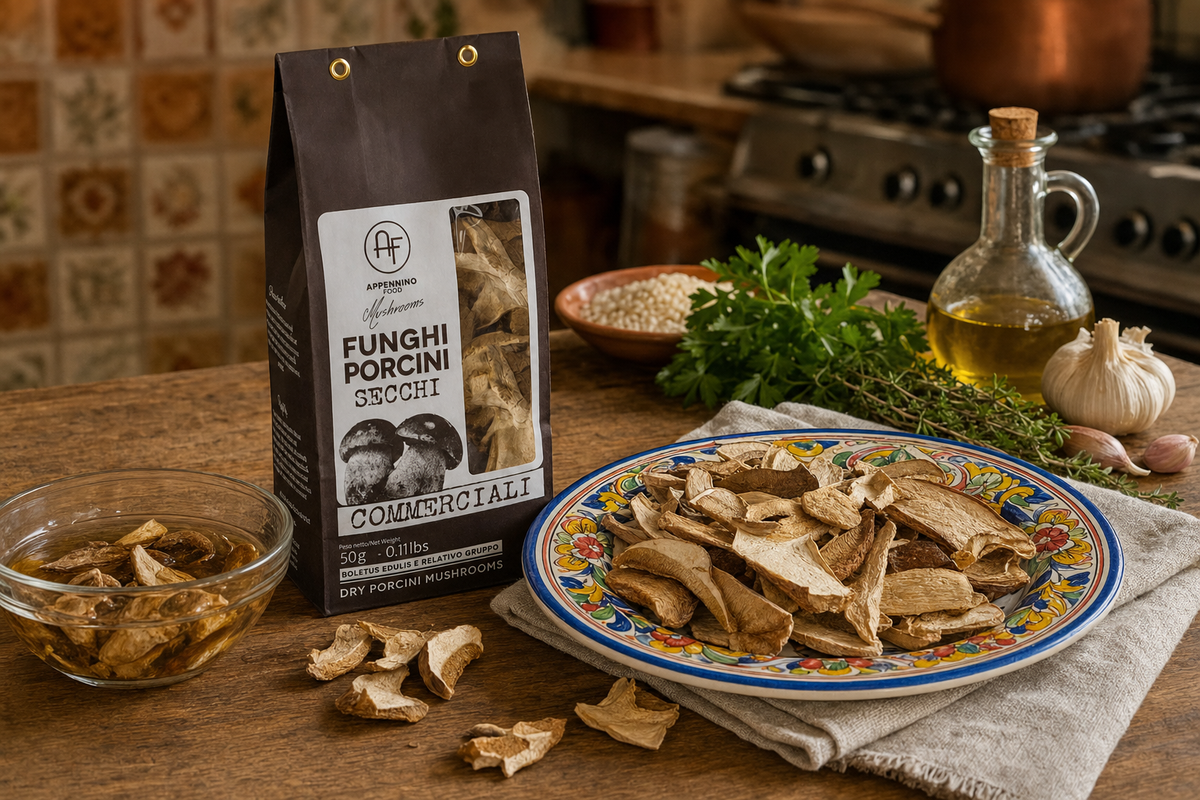
Dried porcini are the classic Italian choice for risotto, ragù, and rich sauces. They bring a deep, earthy, almost nutty flavor and strong umami that stands up to beef, game, and long-simmered dishes. Appennino’s Dried Porcini Mushrooms “Special Quality” are a good example, made from Boletus edulis and allied species selected into beautiful cap and stem slices.
Dried chanterelles, like Appennino Dried Chanterelles Mushrooms, go in a different direction: lighter, with a delicate fruity, apricot-like aroma and a gentle peppery note. They shine with poultry, cream sauces, omelettes, and fish, where you want elegance more than intensity.
Mixed dried mushrooms can be useful, but when you care about consistent flavor or a traditional recipe, single-species products give you more control. Before buying, picture the dish: a robust beef stew calls for porcini; a silky cream sauce for chicken might benefit more from chanterelles.
2. Visual Quality: Color, Shape, and Cleanliness
Even if you cannot open the package, there is a lot you can learn simply by looking at dried mushrooms. Visual inspection is one of the most reliable answers to what to look for before buying dried mushrooms.
Color: High quality dried porcini should be a mix of light beige, tan, and warm brown, with the pores and stems a bit paler than the caps. Very dark, almost black pieces often signal over-drying or age, which can lead to bitterness. For chanterelles, look for golden to orange hues, not dull brown or gray.
Cut and size: Better products will show recognizable slices of cap and stem rather than lots of tiny shards. Appennino’s “Special Quality” porcini are explicitly selected for good cap and stem slices, which rehydrate into attractive pieces that look like fresh mushrooms in your finished dish.
Cleanliness: Some flecks of forest material are normal, but the bag should not be full of grit, sand, or dust. A cloud of powder at the bottom of the package is a sign of breakage and rough handling. Tiny amounts of natural mushroom dust are fine, but you do not want to pay mainly for crumbs unless that is the format you are intentionally buying.
3. Aroma and Freshness: How to Judge Flavor Before You Cook
When you can smell a sample before buying dried mushrooms, use that chance. Aroma is a direct preview of flavor intensity once rehydrated.
What you want: Clean, woodsy, nutty, or fruity aromas depending on the species. Porcini should smell like a walk in the forest in autumn, with a clear savory depth and no sharp off notes. Chanterelles should be lightly fruity, with a hint of apricot and gentle spice.
What to avoid: Musty, moldy, smoky, or chemical smells. A musty scent can indicate poor drying or storage conditions. An aggressive smoky note sometimes signals that the mushrooms were dried over hard smoke or have absorbed foreign odors, which can dominate subtle dishes.
If the pack is sealed and you cannot smell it, rely more heavily on what the label reveals: single species, recent production or best-by date, and a reputable producer that specializes in mushrooms rather than generic commodity products. Appennino Food’s long history with truffles and mushrooms, starting from Luigi Dattilo’s passion in the Apennines, is exactly the sort of specialization that usually correlates with good handling and stable aroma.
4. Format & Cut: Whole Slices vs Commercial Cut vs Crumbs vs Powder
Another crucial part of what to look for before buying dried mushrooms is the cut format. It affects both how your dish looks and how much value you get from each bag.
| Format | Example from Appennino | Best for | When to choose it |
|---|---|---|---|
| Selected whole / large slices | Dried Porcini Mushrooms “Special Quality” | Risotto, visible pieces in pasta sauces, sautés, roasts | When presentation matters and you want the closest result to fresh mushrooms |
| Mixed commercial cut | Dried Porcini Mushrooms “Commercial Quality” | Everyday cooking, soups, stews | If you care about flavor but can live with mixed sizes and slightly more broken pieces |
| Crumbs / small pieces | Dried Porcini Mushrooms “Crumbs” | Ragù, stuffings, blended sauces, stocks | When flavor is what counts and mushrooms will not be visually distinct |
| Powder | Porcini Mushrooms Powder | Seasoning, rubs, quick flavor boosts | For instant umami and when you do not want to deal with soaking or texture |
If you mostly make risotto or tagliatelle ai funghi, it makes sense to pay for a product where most pieces are large, attractive slices, like the Special Quality porcini. If you are enriching a slow-cooked meat sauce that will simmer for hours, crumbs or commercial cut formats are an intelligent way to prioritize flavor over appearance.

Dried Porcini Mushrooms "Crumbs"
Dried Porcini Mushrooms "Crumbs" by Appennino Food. Small broken pieces of dried porcini (Boletus edulis) with the same deep, earthy flavour of whole caps at a friendlier price. Ideal when the…
View product5. Reading the Label: Ingredients, Origin, and Processing
The label often tells you more than the front of the pack. When deciding what to look for before buying dried mushrooms, spend a few seconds on these lines.
Ingredients list: Ideally, it should simply read something like “Dried porcini mushrooms (Boletus edulis)” or “Dried chanterelle mushrooms (Cantharellus cibarius)”. Appennino’s products match this straightforward standard, with no unnecessary additives. Avoid products with flavorings, preservatives, or oils unless you are intentionally buying a ready-to-use mix.
Species name: Seeing the Latin name, as with Boletus edulis on Appennino’s porcini, indicates that the producer is serious about what is in the bag. Vague terms like “wild forest mushrooms” do not necessarily mean low quality, but they give you less certainty about flavor and texture.
Origin: Appennino specifies “Origin EU / non-EU” for its Special Quality porcini, reflecting responsible sourcing from areas where porcini are naturally abundant. For many buyers, knowing that mushrooms come from traditional European mushroom regions adds confidence in both flavor and handling standards.
Storage instructions: You will usually see “store in a cool, dry place,” which matters for maintaining aroma. If the brand also gives rehydration times and serving suggestions, that is a sign of a producer that cares about how you use the product, not only about selling it.
6. How Much Do You Need? Yield, Serving Size, and Value
Dried mushrooms are light, so packages can be deceiving. Instead of judging by bag size, think about how many dishes you want to cook and how intense you like the flavor.
As a rule of thumb, 10 to 15 grams of dried porcini per person is a generous amount for risotto or pasta. Appennino suggests exactly this range for its Special Quality porcini. A 50 gram bag can therefore season roughly 3 to 5 servings, depending on how mushroom-forward you want the dish.
Because dried mushrooms expand when soaked, you do not need much volume in the measuring cup. What matters is flavor concentration. Premium products tend to deliver more aroma per gram, which means you can sometimes use a bit less per portion and still get a satisfying result.
For a home cook who makes mushroom dishes occasionally, high quality slices in a smaller pack often make more sense than buying a large, lower-grade bag that might lose aroma in the pantry. If you cook with mushrooms weekly and often blend them into sauces, picking up a value format like crumbs or powder can be smart, with a smaller pack of Special Quality slices reserved for special occasions.
7. Practical Rehydration & Cooking: What Good Dried Mushrooms Should Do
Another way to think about what to look for before buying dried mushrooms is to imagine the rehydration step. Well dried mushrooms rehydrate quickly, become supple, and share their flavor with both the soaking liquid and the final dish.
Appennino recommends soaking porcini in warm water for about 20 minutes for the Special Quality slices and about 15 to 20 minutes for the Commercial Quality cut. Chanterelles also take around 20 minutes. After soaking, you rinse, squeeze gently, and they are ready to be cooked like fresh mushrooms.
Good mushrooms will feel pleasantly firm yet tender, without tough, woody cores. The soaking liquid should smell fragrant and appetizing. You can strain it through a fine sieve or coffee filter and use it to boost risotto, soups, or sauces, essentially as an instant mushroom stock.
On the other hand, Porcini Mushrooms Powder needs no soaking at all. You simply stir it into your dish, which is perfect when you want porcini depth in a weekday soup or sauce without planning ahead.
8. Matching Mushroom Quality to Specific Dishes
To avoid a poor fit, you should always connect what you see on the package with what you plan to cook. Here is how different quality tiers and species play out in real recipes.
Risotto ai funghi porcini: This is where selected large slices, like the Special Quality porcini, really matter. People expect to see and bite into distinct pieces of mushroom. If you use mainly crumbs, the flavor will be there but the texture will not be as satisfying.
Pasta sauces and ragù: For a slow-cooked meat sauce or a hearty vegetarian ragù, Commercial Quality porcini or crumbs work beautifully. They release plenty of flavor over a long simmer, and no one will notice small, irregular pieces in a deeply reduced sauce.
Clear soups and broths: When you want a clean, elegant presentation, uniform slices or chanterelles are your friend. The mushrooms float or sit in the bowl where guests can see them, so visual consistency counts more.
Creamy chicken or fish dishes: Delicate chanterelles are hard to beat, since their mild fruitiness plays well with cream and white wine. Too much intense porcini can overpower lighter proteins, so this is a case where species selection is more important than sheer intensity.
For a deeper dive into which porcini products suit different recipes, you can also read Appennino’s guide on the best dried porcini mushrooms for risotto, pasta, and sauces, which focuses more on specific dish pairings.
9. Storing Dried Mushrooms After You Buy Them
Even the best purchase can disappoint if it is not stored correctly. When you have decided what to look for before buying dried mushrooms and brought them home, protect that investment.
Keep them cool and dry: Follow the simple instruction you will see on Appennino packs: “store in a cool, dry place.” A pantry or cupboard away from the stove is usually ideal. Avoid humidity, which can dull aroma and risk spoilage.
Use airtight containers: Once the package is opened, consider transferring the mushrooms to a glass jar or airtight container. This reduces contact with air and helps lock in aroma.
Avoid strong odors: Dried mushrooms can absorb odors from nearby foods. Keep them away from heavily scented spices or cleaning products so you do not bring unwanted notes into your dish.
Handled this way, a good quality bag of dried mushrooms can maintain excellent flavor for many months, giving you flexibility to cook whenever inspiration strikes.
10. How Appennino Formats Map to Different Buyers
To make all this practical, it helps to see how specific Appennino products correspond to different buyer priorities and concerns.
If you are chasing restaurant-level presentation for dishes like risotto con funghi porcini, tagliatelle, or elegant roasts, Dried Porcini Mushrooms “Special Quality” are the closest thing to having fresh porcini in your pantry year round.
If you mainly cook hearty, everyday meals like stews, braises, and family pastas, Dried Porcini Mushrooms “Commercial Quality” deliver classic porcini aroma at excellent value. You still get Boletus edulis flavor, in a more rustic mix of slices and pieces.
If you are flavor focused and less concerned about piece size, particularly for ragù, stuffings, and soups, the Porcini “Crumbs” format brings you the same porcini intensity in small broken pieces that disappear into the sauce.
If you want an instant umami upgrade with zero soaking step, Porcini Mushrooms Powder functions like a gourmet seasoning. A spoonful whisked into stock, polenta, or cream sauce can transform a simple weeknight dish.
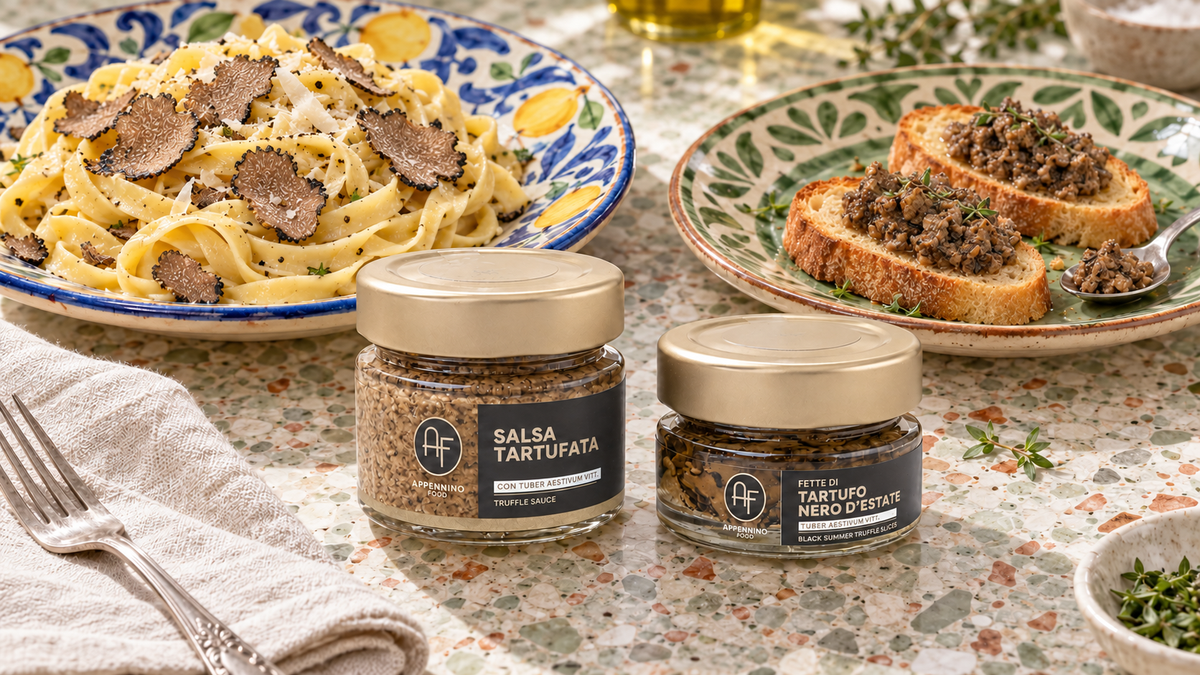
Beyond mushrooms, some cooks like to layer flavors. For example, you might build a mushroom risotto base with porcini and then finish it with a touch of truffle character using Appennino’s Truffle Sauce (Salsa Tartufata) or a few drops of truffle oil from the Truffles collection for a luxurious finishing touch.
11. Quick Checklist: What to Look For Before Buying Dried Mushrooms
To bring everything together, here is a simple checklist you can mentally run through whenever you are choosing dried mushrooms online or in store.
- Species: Do you know what mushroom you are buying (porcini, chanterelle, etc.), and does it match your planned dishes?
- Appearance: Do the pieces look mostly intact, in natural cream to brown or golden hues, without excessive dust or blackened bits?
- Format: Are you intentionally choosing between slices, commercial cut, crumbs, or powder based on how the mushrooms will appear and cook?
- Label: Is the ingredient list clean and specific, ideally listing only the dried mushroom and its Latin name?
- Origin & producer: Is the brand clearly connected to mushrooms and known for careful processing rather than generic bulk goods?
- Rehydration guidance: Does the pack give reasonable soaking times and usage tips, suggesting the mushrooms are expected to rehydrate well?
- Storage plan: Do you have a cool, dry place to store them in an airtight container so they keep their aroma?
With these points in mind, it is much easier to separate truly gourmet dried mushrooms from forgettable ones. You can explore the full range of Appennino dried mushrooms and related specialties in the dedicated Mushrooms collection whenever you are ready to stock your pantry.
FAQ: Buying and Using Dried Mushrooms
How can I tell if dried mushrooms are high quality when buying online?
Focus on clear product photos, species information, and the cut description. Look for visible, intact slices rather than a bag full of dust, and a clean ingredients list that names a specific mushroom like Boletus edulis for porcini. Detailed rehydration and serving instructions, such as Appennino’s 20 minute soaking guidance for Special Quality porcini, are another sign of a producer that expects good rehydration and flavor.
What should I look for before buying dried mushrooms in a physical store?
Hold the pack up to the light and check the color, size, and cleanliness of the pieces. Natural beige to brown tones and identifiable slices are ideal. If allowed, gently smell the pack; it should have a pleasant, woodsy aroma, not mustiness or chemical notes. Then read the label to confirm species, origin, and that no unnecessary additives are included.
Are more expensive dried mushrooms always better?
Price often reflects both species and cut selection, but it is not the only indicator. Premium products like Appennino’s Special Quality porcini cost more because they contain mainly large, attractive slices that are carefully sorted, which matters for presentation. For long-simmered sauces, you may get better value from a lower priced commercial cut or crumbs that deliver the same flavor in a less photogenic format.
How much dried porcini should I buy for risotto or pasta?
A good planning number is 10 to 15 grams of dried porcini per serving. For a four person porcini risotto, that means 40 to 60 grams total. Since dried mushrooms store well in a cool, dry place, it is reasonable to buy a pack that covers several meals as long as you keep it airtight after opening.
What is the difference between Special Quality and Commercial Quality dried porcini?
Special Quality porcini, like Appennino’s top tier product, are carefully selected for beautiful cap and stem slices that rehydrate into pieces resembling fresh mushrooms, perfect when the mushrooms are visually prominent. Commercial Quality porcini are still Boletus edulis but in a more rustic mix of sizes and shades, ideal for everyday cooking where pure flavor matters more than uniform appearance.
When are porcini crumbs a better choice than whole slices?
Porcini crumbs are best when the mushrooms will be chopped or blended into the dish anyway, such as in ragù, soups, stuffings, or patés. Since you are not paying for large slices, crumbs are usually a better value for these uses, while still providing the same deep porcini aroma once rehydrated.
Do dried mushrooms go bad, and how can I spot it?
Dried mushrooms can lose aroma over time and, if stored poorly, can develop mold. Signs of trouble include a musty or sour smell, visible mold spots, or a gummy texture. Properly dried mushrooms stored in a cool, dry, airtight container typically remain safe and flavorful for many months, but you should always trust your eyes and nose before using older packs.
Is it worth buying mushroom powder if I already have dried slices?
It depends on how you cook. Mushroom powder, such as Appennino’s Porcini Mushrooms Powder, brings instant flavor with no soaking step and can be whisked into sauces, stocks, and rubs. If you often cook quick dishes where you do not have 20 minutes to soak slices, powder is a useful complement. For slow recipes where you enjoy mushroom texture, slices or pieces remain essential.
Can I reuse the water used to soak dried mushrooms?
Yes, and you usually should. The soaking water becomes a concentrated mushroom broth that adds depth to risottos, soups, and sauces. After soaking, pour the liquid through a fine sieve or coffee filter to remove grit before adding it to your cooking. Just keep in mind that if the mushrooms smelled off before soaking, it is safer to discard both mushrooms and liquid.
Are dried mushrooms a good substitute for fresh mushrooms in recipes?
Dried mushrooms are not an exact one-to-one substitute for fresh, but they are often more flavorful. In dishes like risotto, braises, and sauces, dried porcini or chanterelles can provide deeper, more concentrated flavor than supermarket fresh mushrooms. You will still need to adjust for texture and volume, but for many Italian dishes, high quality dried mushrooms are the traditional choice rather than a compromise.
Choosing dried mushrooms becomes much simpler once you know what to look for before buying: the right species for your dish, a clean and attractive cut, a pure ingredient list, and a format that matches how you cook. With those boxes checked, dried mushrooms move from “mystery ingredient” to a reliable pantry staple, ready to turn simple rice, pasta, and stews into deeply flavored, restaurant-worthy meals whenever you wish.