Balsamic Vinegar vs Balsamic Glaze: Which One Should You Use?
Balsamic vinegar and balsamic glaze are not the same ingredient. Use balsamic vinegar when you want acidity, depth, and balance in salads, grilled vegetables, meats, and cheeses. Use balsamic glaze when you want a thicker, sweeter, glossy finish that stays visible on the plate.
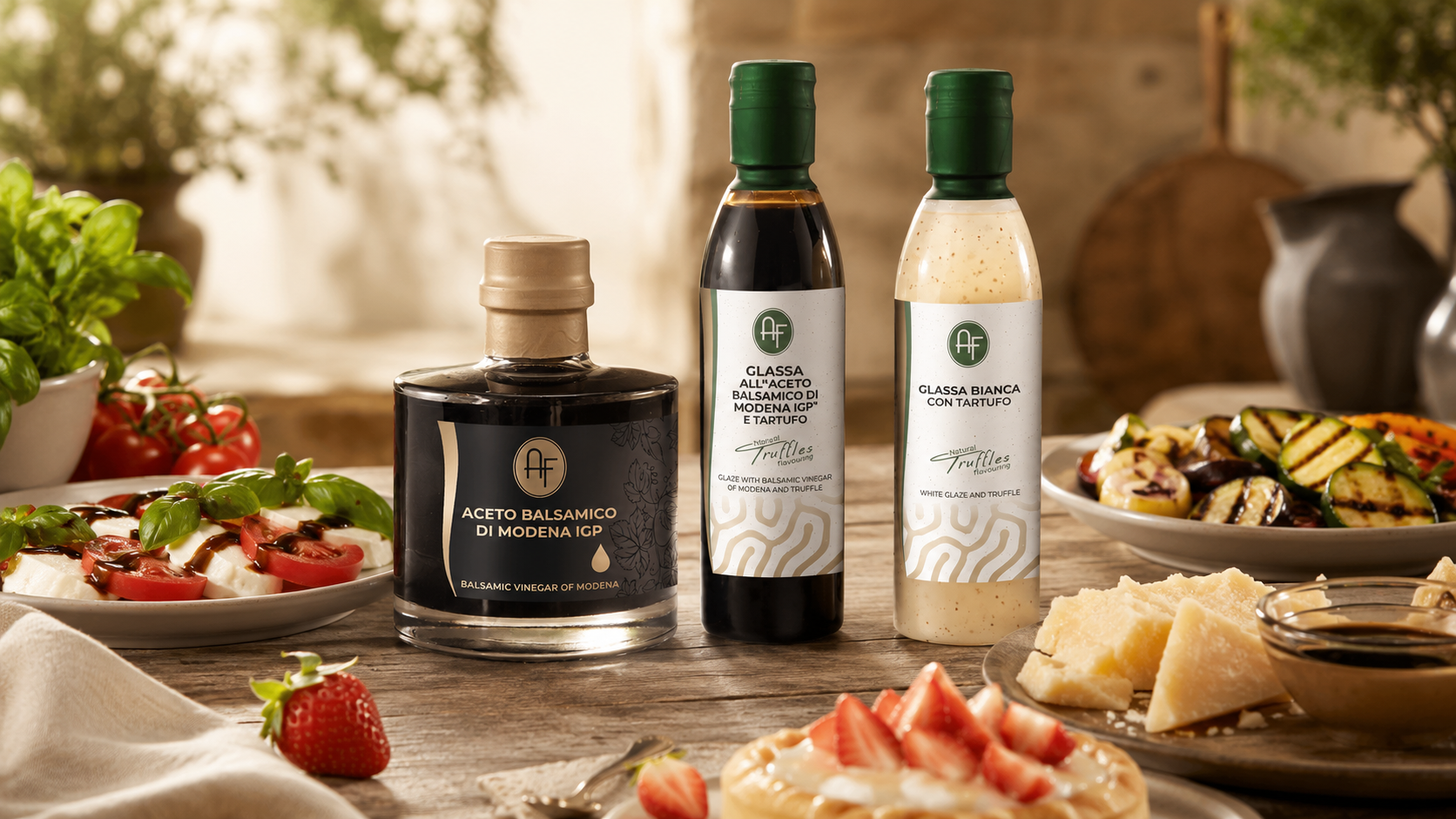
The easiest way to choose is this: Balsamic Vinegar of Modena - Goccia Bronzo is the better choice for dressing, balancing, and finishing savory foods with clean acidity. Truffle Balsamic Glaze is better when you want a sweet, dense, truffle-accented drizzle for cheese, meats, bruschetta, caprese, risotto, or mushrooms. White Natural Glaze with Truffle is best when you want a lighter sweet-and-sour finish for fruit, cheese, carpaccio, strawberries, or even dessert.
Key takeaways
- Balsamic vinegar is thinner and more acidic, so it is best for salads, vegetables, meats, and cheese plates that need balance.
- Balsamic glaze is thicker and sweeter, so it is best as a visible finishing drizzle.
- Use truffle balsamic glaze for savory dishes, especially cheese, red meat, bruschetta, caprese, risotto, and mushrooms.
- Use white truffle glaze for lighter pairings, especially fruit, carpaccio, fresh cheeses, strawberries, and desserts.
- For a complete pantry, keep one balsamic vinegar and one glaze so you can dress, finish, and plate dishes properly.
Balsamic vinegar vs balsamic glaze: the simple difference
Balsamic vinegar is a liquid condiment used for acidity, aroma, and balance. It can be mixed into dressings, drizzled over vegetables, added to meats, or served with cheese. It flows easily, so it spreads through a dish instead of sitting on top.
Balsamic glaze is thicker, glossier, and sweeter. It is usually used at the end, not as the base of a dressing. A glaze is designed to decorate and finish food, which is why it works so well on caprese, grilled meat, bruschetta, roasted vegetables, cheese boards, fruit, and desserts.
That difference matters because the wrong choice can change the dish. If a salad needs brightness, glaze can feel too sweet and heavy. If a cheese board needs a beautiful finishing line, regular vinegar may run across the plate instead of staying where you want it.
Comparison table
Use this quick guide when deciding which bottle belongs on the table.
| Option | Texture and flavor | Best uses | What to buy at Appennino |
|---|---|---|---|
| Balsamic vinegar | Fluid, aromatic, acidic, balanced, less sweet than glaze | Salads, grilled vegetables, meats, cheeses, simple dressings | Balsamic Vinegar of Modena - Goccia Bronzo |
| Truffle balsamic glaze | Dense, glossy, sweeter, savory, truffle-accented | Cheese, red meat, bruschetta, caprese, risotto, mushroom dishes | Natural Glaze with Balsamic Vinegar of Modena with Truffle |
| White truffle glaze | Light-colored, sweet-and-sour, glossy, delicate truffle aroma | Fruit, fresh cheese, carpaccio, strawberries, ice cream, lighter plates | White Natural Glaze with Truffle |
When to use balsamic vinegar
Use balsamic vinegar when the dish needs acidity and balance. This is especially important with rich foods, fatty meats, creamy cheeses, grilled vegetables, and simple salads. The vinegar cuts through richness and makes the dish feel cleaner.
Balsamic Vinegar of Modena - Goccia Bronzo is a strong pantry choice because it works across everyday and premium dishes. Use it with olive oil for a salad dressing, drizzle it over grilled vegetables, spoon it near aged cheese, or add a few drops to roasted meat before serving.
Best uses for balsamic vinegar
- Mixed into salad dressing with extra-virgin olive oil.
- Drizzled over grilled zucchini, eggplant, asparagus, or peppers.
- Served with Parmigiano Reggiano, aged cheeses, or charcuterie.
- Used lightly on steak, pork, chicken, or roasted meats.
- Added to a simple side salad next to pasta, such as restaurant-style Bolognese pasta.
If you are building an Italian pantry, balsamic vinegar belongs next to pasta, sauces, olive oil, and other Italian pantry staples. It is one of the easiest ingredients to use often because it can finish a dish without adding heaviness.
When to use balsamic glaze
Use balsamic glaze when you want sweetness, thickness, and visual impact. Glaze sits on top of food more clearly than vinegar, which makes it useful for plating. A small drizzle can make a simple plate of cheese, meat, vegetables, or crostini feel more finished.
Natural Glaze with Balsamic Vinegar of Modena with Truffle is especially useful when the dish already leans savory. It pairs well with cheese, red meat, bruschetta, caprese, risotto, and mushroom dishes because it brings sweetness, acidity, gloss, and truffle aroma in one finishing touch.
Best uses for truffle balsamic glaze
- Drizzled over aged cheese or a cheese board.
- Finished over sliced steak or roasted meat.
- Added to bruschetta, crostini, or caprese.
- Used as a finishing accent for risotto or mushrooms.
- Drizzled lightly over roasted vegetables before serving.
Use glaze with restraint. The goal is not to cover the plate. A few clean lines or drops can add enough flavor and make the dish look more intentional.
When to use white truffle glaze
White truffle glaze is the better choice when dark balsamic flavor would be too strong or too visually heavy. It gives you sweet-and-sour brightness, a glossy texture, and a lighter look on the plate.
White Natural Glaze with Truffle works beautifully with foods that need a delicate finish: fruit salad, fresh cheese, carpaccio, strawberries, and ice cream. It is also useful when you want truffle aroma but do not want the darker, more intense look of balsamic glaze.
Best uses for white truffle glaze
- Fresh strawberries or berries.
- Vanilla ice cream or panna cotta.
- Fresh cheeses, burrata, ricotta, or mild goat cheese.
- Carpaccio or delicate cold plates.
- Fruit salads and light appetizers.
If the dish is dark, rich, grilled, or meaty, choose truffle balsamic glaze. If the dish is fresh, pale, delicate, fruity, or creamy, choose white truffle glaze.
How to choose the right Appennino bottle
The best choice depends on the job you need the condiment to do. Think about whether the dish needs acidity, sweetness, texture, aroma, or presentation.
| Your dish needs | Choose this | Why | Best pairing idea |
|---|---|---|---|
| Acidity and balance | Balsamic Vinegar of Modena - Goccia Bronzo | It cuts richness and works in dressings | Salad with olive oil, grilled vegetables, aged cheese |
| Sweetness and a glossy finish | Truffle Balsamic Glaze | It stays visible and adds savory truffle aroma | Caprese, steak, cheese, mushroom risotto |
| A lighter sweet-and-sour finish | White Natural Glaze with Truffle | It is more delicate and works with fruit and fresh cheese | Strawberries, ice cream, ricotta, carpaccio |
Best pairings for balsamic vinegar
Balsamic vinegar works best when the food needs contrast. It is especially good with ingredients that are creamy, fatty, grilled, roasted, salty, or slightly sweet.
- Salads, use it with olive oil, salt, and black pepper.
- Grilled vegetables, drizzle lightly after cooking.
- Cheese, especially Parmigiano Reggiano and aged cheeses.
- Meat, use a few drops over steak, pork, or chicken.
- Fruit, especially strawberries, figs, and pears when you want a classic sweet-acid contrast.
For a complete dinner, serve a rich pasta like Pappardelle Bolognese, then balance the meal with a salad dressed with Balsamic Vinegar of Modena and extra-virgin olive oil.
Best pairings for truffle balsamic glaze
Truffle balsamic glaze works best when the plate needs a finishing accent. It is richer and sweeter than vinegar, so it should be used in smaller amounts.
- Cheese boards, drizzle near Parmigiano, pecorino, aged cheddar, or blue cheese.
- Steak and roasted meats, add a thin line after slicing.
- Bruschetta and crostini, especially with cheese, mushrooms, tomatoes, or prosciutto.
- Caprese, use it as a darker, more aromatic finish.
- Mushroom dishes, pair with pasta, risotto, or recipes like Chicken in Broccoli Cream with Black Truffle Slices.
If you already enjoy truffle products, this glaze fits naturally into the same pantry as Truffle Honey, truffle slices, truffle oil, and the broader Natural Line.
Best pairings for white truffle glaze
White truffle glaze is more unexpected because it works in both savory and sweet directions. It can finish fresh cheese, fruit, carpaccio, or dessert without turning the dish dark or heavy.
- Strawberries, use a few drops instead of a heavy syrup.
- Fresh cheese, drizzle over ricotta, burrata, mozzarella, or goat cheese.
- Carpaccio, use sparingly with olive oil and salt.
- Ice cream, especially vanilla or fior di latte.
- Fruit salads, where a sweet-and-sour finish adds contrast.
This is the bottle to use when you want something more creative than classic vinegar. It is also a good dessert-friendly alternative to darker balsamic glaze.
Shop the comparison
Start with balsamic vinegar for balance, then add one glaze for plating and finishing. Together, these three bottles cover salads, cheese, meats, vegetables, fruit, and desserts.

Balsamic Vinegar of Modena - Goccia Bronzo
Best for salads, grilled vegetables, meats, cheese, and everyday balance.
View product
Truffle Balsamic Glaze
Best for cheese, meat, bruschetta, caprese, risotto, and mushroom dishes.
View product
White Natural Glaze with Truffle
Best for fruit, fresh cheese, carpaccio, strawberries, and desserts.
View productCommon mistakes with balsamic vinegar and glaze
Using glaze as a salad dressing
Glaze can be too sweet and thick for a full salad dressing. Use balsamic vinegar for the dressing, then add glaze only as a small finishing touch if needed.
Using too much glaze
Glaze is concentrated and visually strong. Start with a few drops or a thin line. You can always add more, but too much can make the dish taste sweet and heavy.
Adding vinegar too early to hot food
Balsamic vinegar is often best near the end. If you cook it too long, the acidity and aroma can become muted. Use it as a finish unless the recipe specifically calls for cooking it down.
Pairing truffle glaze with too many strong flavors
Truffle works best when the dish is not overcrowded. Keep pairings simple: cheese, mushrooms, meat, eggs, potatoes, risotto, or bread.
Forgetting the visual role
Vinegar spreads, glaze holds its shape. If you want plating lines, use glaze. If you want flavor distributed through the dish, use vinegar.
Frequently asked questions
Is balsamic glaze the same as balsamic vinegar?
No. Balsamic vinegar is thinner and more acidic, while balsamic glaze is thicker, sweeter, and designed more for finishing and plating.
Which is better for salads, balsamic vinegar or glaze?
Balsamic vinegar is usually better for salads because it mixes well with olive oil and gives the dressing balance. Glaze can be used in small amounts as a finishing drizzle.
Which is better for cheese boards?
Both can work. Use balsamic vinegar when you want acidity next to aged cheese. Use truffle balsamic glaze when you want a sweeter, thicker, more decorative finish.
Can I use balsamic glaze on meat?
Yes. Truffle balsamic glaze works well as a finishing drizzle over steak, roasted meats, and grilled dishes. Use it after cooking rather than as a heavy sauce.
What is white truffle glaze used for?
White truffle glaze is best for lighter dishes such as fruit, fresh cheese, carpaccio, strawberries, and desserts. It gives a sweet-and-sour finish without the dark color of classic balsamic glaze.
Can I use balsamic vinegar instead of balsamic glaze?
You can substitute them in some dishes, but the result changes. Vinegar is thinner and sharper, while glaze is thicker and sweeter. Use vinegar for balance and glaze for finishing.
Can I use balsamic glaze instead of balsamic vinegar?
Sometimes, but not for every recipe. Glaze is usually too thick and sweet for a vinaigrette. It works better as a final drizzle on cheese, meat, vegetables, fruit, or desserts.
Which Appennino product should I buy first?
Start with Balsamic Vinegar of Modena - Goccia Bronzo if you want the most versatile everyday bottle. Add truffle balsamic glaze if you want a savory finishing drizzle, or white truffle glaze if you want something lighter for fruit, cheese, and desserts.
Does truffle balsamic glaze go with pasta?
It can, but use it carefully. It is better as a small finishing accent on mushroom pasta, risotto, or cheese-based dishes than as a main sauce.
What foods should I avoid with balsamic glaze?
Avoid using too much glaze on dishes that are already very sweet, very spicy, or very acidic. The best pairings are simple foods where the glaze can add contrast without taking over.
Ready to choose the right balsamic finish?
Use Balsamic Vinegar of Modena - Goccia Bronzo for balance, Truffle Balsamic Glaze for savory finishing, and White Natural Glaze with Truffle for fruit, cheese, carpaccio, and desserts.
Shop oils and vinegars