
Traditional Bolognese Meat Sauce vs Bolognese Pasta Sauce: What Is the Difference?
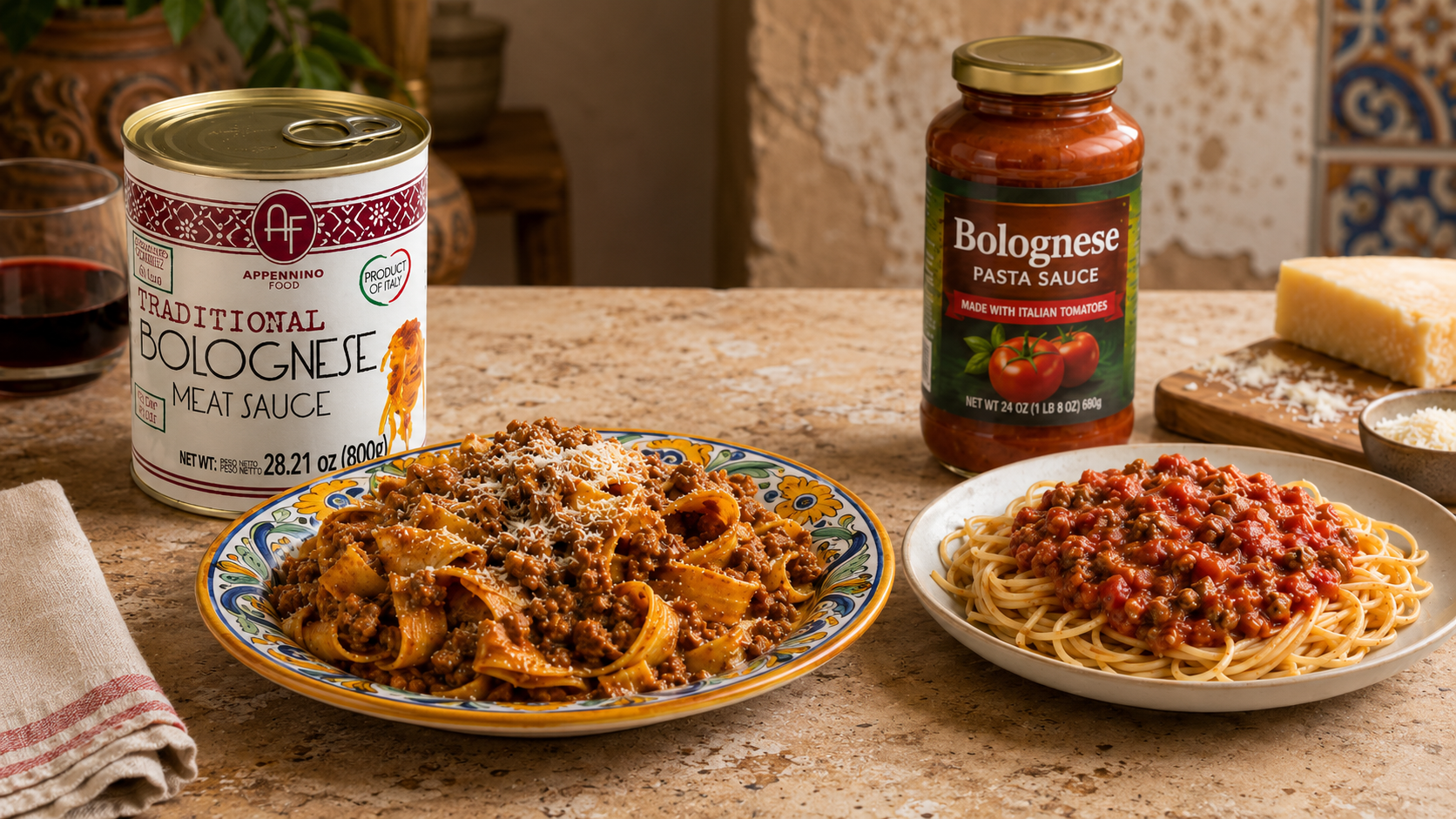
Traditional Bolognese meat sauce is not simply tomato sauce with ground meat added to it. It is a rich, slowly cooked, meat-forward sauce built around beef, pork, vegetables, tomato, and fat. The Bolognese pasta sauce commonly found in American supermarkets is usually looser, quicker, and much more tomato-forward.
The easiest way to understand the difference is to identify which ingredient leads the sauce. In traditional Bolognese meat sauce, the meat is the foundation and the tomato supports it. In supermarket-style Bolognese pasta sauce, tomato is usually the main ingredient and meat is added for extra flavor and texture. Appennino Premium Traditional Bolognese Meat Sauce combines beef, pork, cured ham, tomato, extra-virgin olive oil, carrots, onion, and celery in a rich sauce designed for tagliatelle, pappardelle, and lasagna.
Key takeaways
- Traditional Bolognese meat sauce is meat-forward, while Bolognese pasta sauce is usually more focused on tomato.
- Traditional Bolognese meat sauce is cooked slowly, allowing the meat, vegetables, tomato, and fat to develop a deeper, more integrated flavor.
- The traditional sauce should be rich and cohesive, not watery or similar to marinara with ground beef added.
- Tagliatelle, pappardelle, and lasagna are the best pairings, because they hold a substantial meat sauce more effectively than thin pasta.
- A quality ready-made traditional Bolognese meat sauce should clearly list its meats, vegetables, tomato, and storage instructions.
What is traditional Bolognese meat sauce?
Traditional Bolognese meat sauce is a slow-cooked Italian sauce associated with Bologna and the Emilia-Romagna region. In Italy, it is known as ragù alla Bolognese. For American shoppers, the clearest description is traditional Bolognese meat sauce because meat, rather than tomato, forms the center of the recipe.
Traditional versions are built with meat, a finely chopped vegetable base, fat, a controlled amount of tomato, and enough cooking time for the ingredients to become one cohesive sauce.
The exact recipe can vary between families and producers. Some traditional recipes use beef and pancetta, while others combine beef with pork, cured ham, or another pork ingredient. Wine, milk, broth, butter, or olive oil may also be used depending on the recipe.
What remains consistent is the structure. Traditional Bolognese meat sauce should taste like a prepared meat ragù, not like a bright tomato pasta sauce containing loose pieces of ground beef.
For more guidance on choosing and serving a prepared Italian option, read the guide to the best Italian Bolognese sauce for restaurant-style pasta at home.
In this guide, “Bolognese pasta sauce” refers to the tomato-forward, ground-meat pasta sauce commonly prepared or sold in American supermarkets. Recipes vary, but this term helps distinguish those sauces from traditional Italian Bolognese meat sauce.
Traditional Bolognese meat sauce vs Bolognese pasta sauce
The most important differences are the balance of meat and tomato, the cooking time, the texture, and the pasta used to serve each sauce.
| Characteristic | Traditional Bolognese meat sauce | Bolognese pasta sauce |
|---|---|---|
| Main flavor | Meat-forward, savory, rich, and slowly developed | Usually tomato-forward with ground meat added for flavor and texture |
| Typical meat | Beef combined with pork, pancetta, cured ham, or another pork ingredient | Frequently ground beef, turkey, sausage, or a smaller amount of a single meat |
| Vegetable base | Finely chopped onion, carrot, and celery | Often onion and garlic, with other vegetables varying by brand or recipe |
| Tomato level | Used to support the meat without dominating it | Usually the primary base of the sauce |
| Texture | Thick, cohesive, and able to cling to wide pasta | Often looser, brighter, and closer to a tomato pasta sauce |
| Cooking style | Long, slow cooking | Frequently prepared as a faster weeknight or mass-produced sauce |
| Best pasta | Tagliatelle, pappardelle, lasagna, and other substantial pasta | Spaghetti, penne, rigatoni, or other common supermarket pasta |
Why traditional Bolognese meat sauce contains more meat
A traditional Bolognese meat sauce begins by treating meat as the central ingredient. Tomato contributes sweetness, acidity, moisture, and depth, but it should not erase the flavor of the beef or pork.
This is why the ingredient list matters when buying a prepared sauce. Appennino Premium Traditional Bolognese Meat Sauce lists beef at 24%, pork at 16.3%, and cured ham at 7.7%. Together, those meats represent a substantial portion of the finished sauce.
The vegetable base also matters. Carrot, onion, and celery provide sweetness and aroma without making the sauce taste sugary. They create the background that allows the meat and tomato to taste balanced and complete.
A typical supermarket Bolognese pasta sauce often begins with tomatoes or tomato puree. Meat may appear further down the ingredient list and may represent a much smaller percentage of the finished sauce.
Why traditional Bolognese meat sauce takes longer to cook
Time changes both the flavor and texture of traditional Bolognese meat sauce. Slow cooking allows moisture to reduce, meat to soften, vegetables to disappear into the sauce, and tomato to lose its raw sharpness.
A quick Bolognese pasta sauce can still be satisfying, but the ingredients normally taste more separate. You may notice tomato, ground meat, onion, garlic, and herbs as individual elements.
In traditional Bolognese meat sauce, those ingredients become more integrated. The finished sauce tastes deeper, rounder, and more cohesive.
This does not mean every home dinner must require several hours of preparation. A ready-made traditional Bolognese meat sauce can provide the result of slow cooking while reducing the work required at home.
Which pasta should you use with traditional Bolognese meat sauce?
Wide egg pasta is one of the best choices because its broad surface holds the thick sauce. Tagliatelle is the classic Bologna pairing, while pappardelle gives the dish an especially generous, restaurant-style texture.
Appennino Pappardelle is made with durum wheat semolina and 33.2% fresh eggs. Its wide ribbons are designed to carry a hearty traditional Bolognese meat sauce rather than allowing the sauce to fall to the bottom of the bowl.
Best pasta shapes for traditional Bolognese meat sauce
- Tagliatelle: the classic pairing in Bologna.
- Pappardelle: wide ribbons that hold a generous amount of meat sauce.
- Lasagna sheets: ideal for layering the sauce with béchamel and Parmigiano Reggiano.
- Rigatoni: a practical option when you prefer short pasta.
- Garganelli: a ridged egg pasta that catches thick meat sauce.
Spaghetti with Bolognese pasta sauce can be delicious, but it is not the traditional pairing for the Italian meat sauce. Thin strands provide less surface area for holding the thick sauce, so more meat may remain behind on the plate.
How traditional Bolognese compares with other Italian pasta sauces
Traditional Bolognese meat sauce is only one type of Italian sauce. The right choice depends on whether you want a meat-forward sauce, a tomato and sausage sauce, or a creamy cheese sauce.
| Sauce | Main character | Best uses | Appennino option |
|---|---|---|---|
| Traditional Bolognese meat sauce | Rich, meaty, thick, and slowly developed | Tagliatelle, pappardelle, lasagna, baked pasta | Premium Traditional Bolognese Meat Sauce |
| Bolognese pasta sauce | Tomato-forward, familiar, and usually lighter on meat | Spaghetti, penne, baked pasta, and quick family meals | Compare ingredient lists and meat percentages before buying |
| Sausage tomato sauce | Rustic tomato flavor with Italian sausage | Rigatoni, penne, polenta, and baked pasta | Tomato Sauce with Onion and Salsiccia |
| Cacio e Pepe | Creamy, salty, cheesy, and peppery | Tonnarelli, spaghetti, rigatoni, and egg pasta | Cacio e Pepe Sauce |
Traditional Bolognese meat sauce is the best choice when you want the deepest meat flavor. Sausage sauce is better when you want a brighter tomato sauce with a rustic pork character. Cacio e Pepe is better when you want a rich cheese sauce without tomato or meat.
Keeping several formats in your Italian pantry makes it easier to create different dinners without preparing every sauce from the beginning.
How to identify a quality ready-made traditional Bolognese meat sauce
A strong product page or package should tell you more than the words “Bolognese sauce.” Look for specific information that explains how the sauce is built and whether meat or tomato is the primary focus.
Check the meat percentages
A transparent label should identify which meats are used and ideally state their percentages. This helps you distinguish a substantial traditional Bolognese meat sauce from a mostly tomato-based Bolognese pasta sauce containing only a small amount of meat.
Look for onion, carrot, and celery
These vegetables form the classic aromatic foundation of many traditional Bolognese recipes. Their presence supports a more rounded, slowly developed flavor.
Review the tomato balance
Tomato puree or paste is appropriate, but the finished sauce should not look or taste like marinara. The meat should remain clearly visible and central.
Check the fat
Extra-virgin olive oil, butter, pork fat, or another cooking fat helps give traditional Bolognese meat sauce its rounded texture and ability to coat pasta.
Read the storage instructions
Prepared meat sauces require careful storage after opening. Appennino instructs customers to refrigerate its traditional Bolognese meat sauce after opening and use it within five days.
How to serve prepared traditional Bolognese meat sauce
The way you finish the pasta can make as much difference as the sauce itself. Do not simply place plain pasta in a bowl and pour the sauce over the top.
- Bring a large pot of salted water to a boil.
- Warm the traditional Bolognese meat sauce gently in a wide pan.
- Cook the pasta until al dente.
- Reserve a small cup of pasta water before draining.
- Add the pasta directly to the pan with the sauce.
- Toss the pasta and sauce together over gentle heat.
- Add a small amount of pasta water only if the sauce needs loosening.
- Finish with Parmigiano Reggiano and serve immediately.
The finished pasta should look coated and glossy. It should not be dry, but it should not sit in a pool of watery tomato sauce.
Can you add mushrooms or herbs to traditional Bolognese meat sauce?
You can, but additions should support the sauce rather than change its identity. Mushrooms add earthy depth, while herbs can make the finished dish taste fresher and more aromatic.
For a mushroom variation, rehydrate a small amount of dried porcini, chop them finely, and add them while warming the sauce. The guide to dried porcini mushrooms for pasta and sauces explains how to strain and use the soaking liquid safely.
With herbs, use restraint. Parsley, thyme, rosemary, or a small amount of sage can work, but too many herbs can overpower the meat. Read Mastering Italian Herbs for more pairing ideas.
What should you serve with traditional Bolognese meat sauce?
Because traditional Bolognese meat sauce is rich, the best side dishes are simple and balanced. A complete dinner does not need several heavy courses.
- A green salad with olive oil and balsamic vinegar.
- Warm Italian bread or crostini.
- Roasted zucchini, eggplant, cauliflower, or asparagus.
- Parmigiano Reggiano served at the table.
- A light appetizer with cheese, vegetables, or mushrooms.
Truffle butter potatoes can work as a richer side for a special dinner, but they should be served in a small portion. The truffle butter cooking guide explains how to use it with potatoes, bread, vegetables, and steak.

Recommended product: Premium Traditional Bolognese Meat Sauce
Made with beef, pork, cured ham, tomato, extra-virgin olive oil, carrots, onion, and celery for a rich, meat-forward Italian sauce that pairs naturally with tagliatelle, pappardelle, and lasagna.
View Traditional Bolognese Meat SauceCommon mistakes when serving traditional Bolognese meat sauce
Treating it like tomato pasta sauce
Traditional Bolognese meat sauce is not meant to be a bright, loose tomato sauce. Avoid diluting it excessively or adding large amounts of marinara.
Using too much sauce
The pasta should be coated rather than buried. Begin with less sauce than you think you need, toss it thoroughly, and add more only when necessary.
Choosing pasta that cannot hold the sauce
Wide ribbons, ridged tubes, and lasagna sheets are better equipped to carry a hearty traditional Bolognese meat sauce than very thin pasta.
Pouring the sauce over plain pasta
Finish the pasta in the pan with the sauce. This distributes the meat, tomato, and fat more evenly and gives the dish a restaurant-style texture.
Adding too many strong ingredients
A quality traditional Bolognese meat sauce already has depth. Heavy cream, large amounts of garlic, hot peppers, or strongly flavored oil can cover the balance of the sauce.
Frequently asked questions
What is traditional Bolognese meat sauce?
Traditional Bolognese meat sauce is a slow-cooked Italian sauce from Bologna that places meat at the center of the recipe. It combines meat, vegetables, tomato, and fat into a thick, cohesive sauce.
What is Bolognese pasta sauce?
Bolognese pasta sauce usually refers to the tomato-forward sauce commonly sold in American supermarkets. It normally contains ground meat, but tomato often remains the dominant ingredient.
What is the biggest difference between traditional Bolognese meat sauce and Bolognese pasta sauce?
The biggest difference is the balance of meat and tomato. Traditional Bolognese meat sauce is meat-forward, while Bolognese pasta sauce is usually tomato-forward.
Is traditional Bolognese meat sauce the same as ragù alla Bolognese?
Yes. Ragù alla Bolognese is the Italian name for the traditional slow-cooked meat sauce associated with Bologna. “Traditional Bolognese meat sauce” is a clearer description for many American shoppers.
Does traditional Bolognese meat sauce contain pork?
Many traditional versions include pork in the form of pancetta, ground pork, cured ham, or another pork ingredient. Appennino Premium Traditional Bolognese Meat Sauce uses pork and cured ham alongside beef.
Does traditional Bolognese meat sauce contain a lot of tomato?
It contains tomato, but it should not taste like marinara. Tomato supports the meat and vegetables instead of dominating the sauce.
What pasta is best with traditional Bolognese meat sauce?
Tagliatelle is the classic Bologna pairing. Pappardelle, lasagna sheets, rigatoni, and other substantial pasta shapes can also hold the thick sauce well.
Why is spaghetti not the best pasta for traditional Bolognese meat sauce?
Thin spaghetti has less surface area for holding a thick, meat-forward sauce. Wide egg pasta allows more meat, sauce, and pasta to come together in each bite.
How can you tell whether a prepared Bolognese sauce is traditional?
Check the meat percentages, identify the types of meat used, look for onion, carrot, and celery, and make sure the sauce is not mostly tomato. A traditional sauce should be thick, rich, and clearly meat-forward.
How long does opened traditional Bolognese meat sauce last?
Follow the instructions on the package. Appennino Premium Traditional Bolognese Meat Sauce should be refrigerated after opening and used within five days.
Ready to serve traditional Bolognese meat sauce?
Pair Appennino Premium Traditional Bolognese Meat Sauce with tagliatelle, pappardelle, or lasagna for a rich, meat-forward Italian dinner without preparing a slow-cooked sauce from the beginning.
Shop Traditional Bolognese Meat SauceRead more
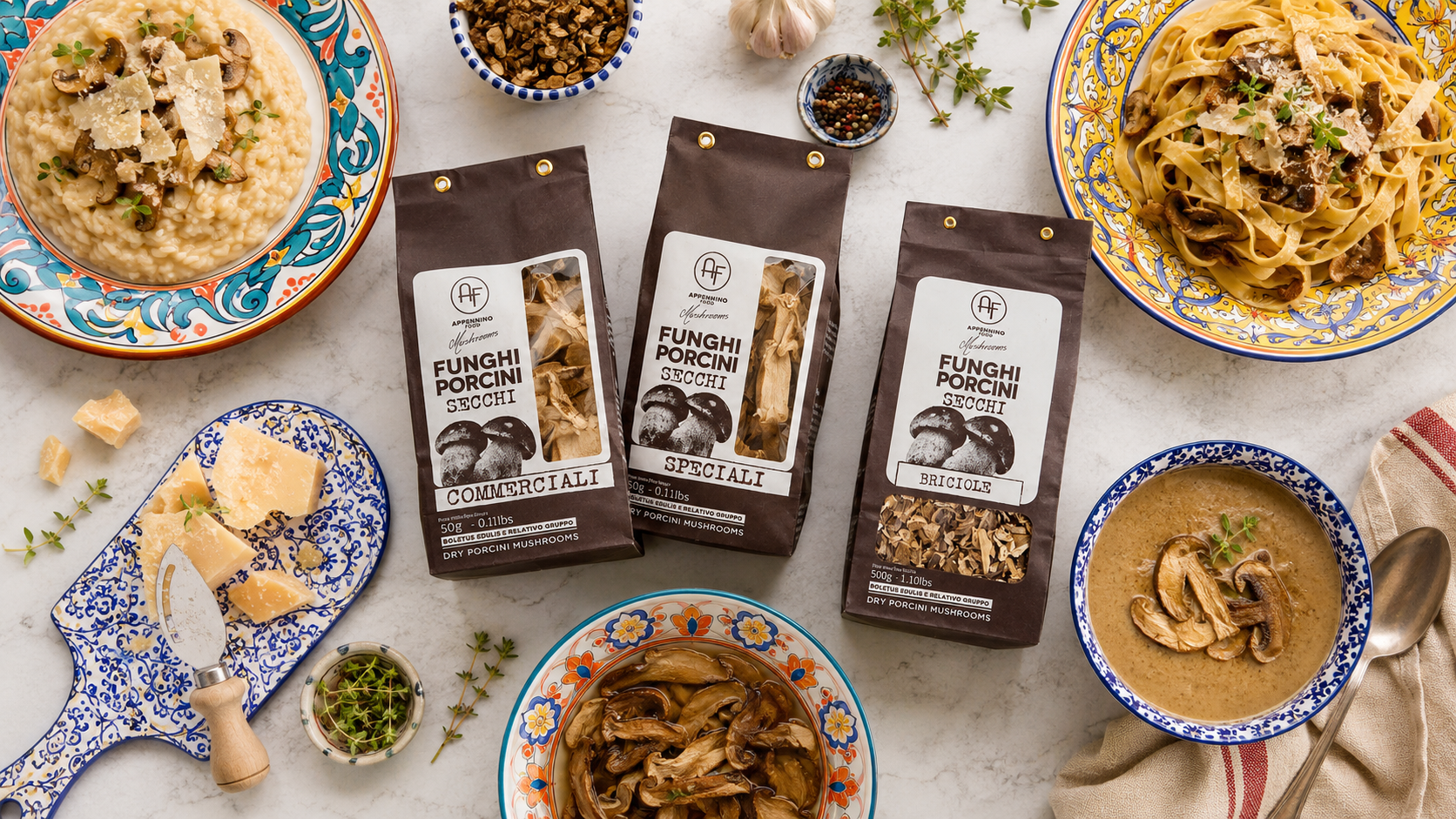
Dried porcini mushrooms bring deep, earthy Italian flavor to risotto, pasta, sauces, soups, and roasts. Learn how to rehydrate them correctly, use the soaking liquid, and choose the right Appennino...
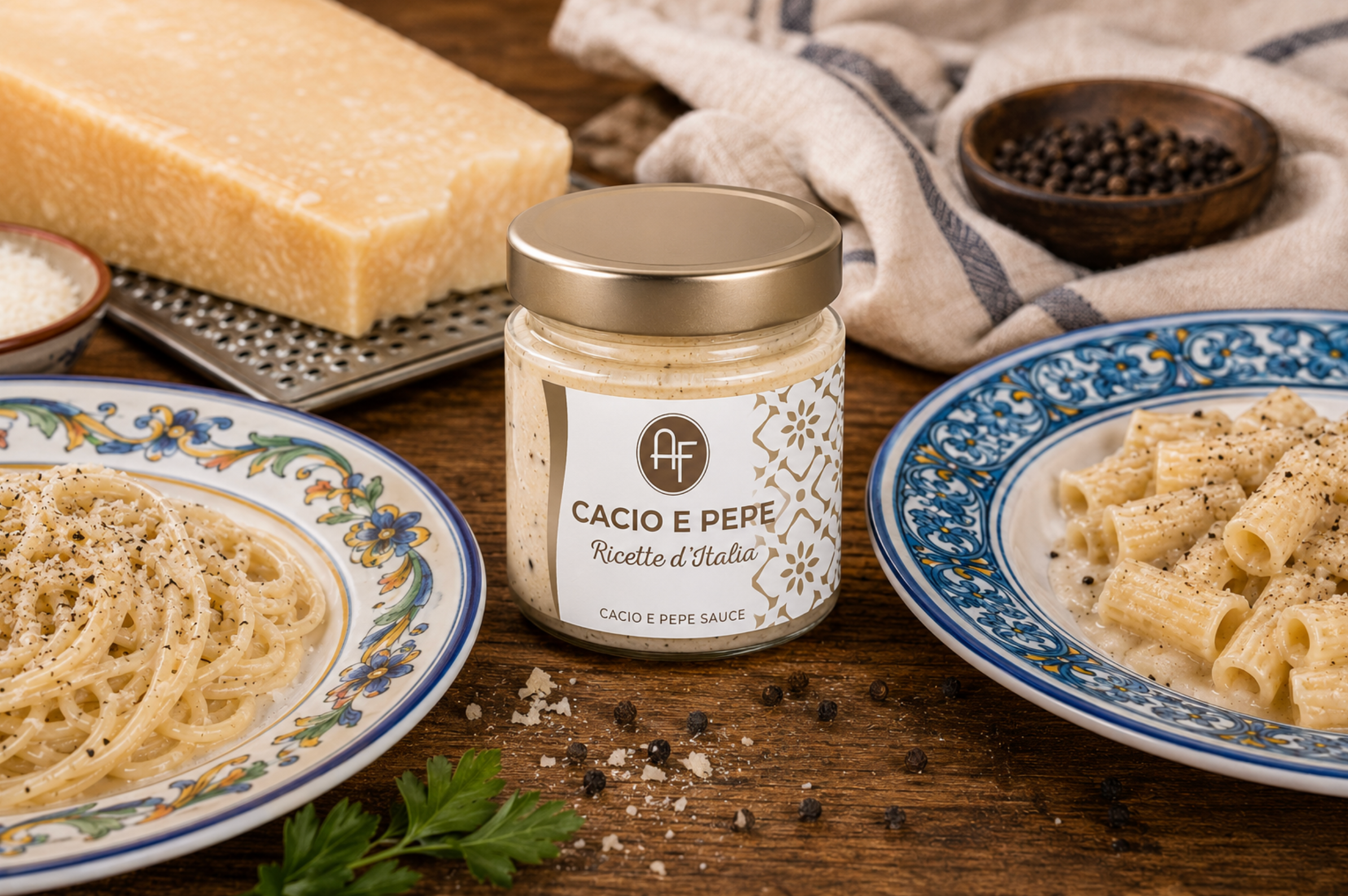
A good ready-made Cacio e Pepe sauce should put Pecorino Romano and black pepper at the center, not taste like a generic cream sauce. Learn what to check on the label and how to turn a jar into a r...